
Human beings have a long-standing custom of burying their dead. Around one-hundred-thousand years ago, human individuals were buried in a cave, Qafzeh Cave in Israel, with coloring tools left in-situ. The stone tools, including lumps of ochre, indicate primitive artistry, a form of burial ritual. What shapes or marks were rubbed onto the corpses is unknown, a matter of guesswork for archaeologists and anthropologists, but the mere fact of funeral art indicates some significance attached to the dead bodies and their burial in-ground. Perhaps the simplest meaning of the art associated with primitive burial was ‘we the living, who survive, do not forget you, our dead.’ That memory was important in burying the dead in the old stone age (paleolithic era) is shown by the proximity of the grave(s) to the living community: “people used caves a lot during the Middle Paleolithic — living, eating and socializing in them.”1 Rather than place graves away from the group, graves were located nearby, where they could be seen and referenced any time. In some sense, with memory and closeness of the dead in the grave-pit, the deceased were still part of the living community.
A Right to Burial
Legal right to burial stems from common law in English-speaking countries, traditions and reports of court orders concerning interment going back to the Middle Ages. In American society, next of kin has the right to bury their dead. If there is no surviving family or if indigence is apparent, the state, usually the local county, will bury or cremate the deceased.
A Moral Duty to Bury the Dead
Beyond any law concerning burial is the ordinary repugnance toward unburied bodies and exposure to scavenging animals.2 Seeing and smelling a decomposing body is not pleasant; burial hides this natural process and so laws for burial are unneeded, though laws do provide social order in this matter. Aversion to rotting corpses and human bodies becoming carrion is why crucifixion and similar execution methods were used in olden times; they served as deterrence for crimes such as treason or rebellion.3
Here are three fictional cases of people insisting on burying the dead, even when circumstance makes it a perilous proposition.
Star Trek: ‘The Galileo Seven’
‘The Galileo Seven’ (1967) is an episode of TV series Star Trek, written by Oliver Crawford. ‘Galileo’ is the name of a shuttlecraft which launches from the ‘Enterprise’ with a seven-person crew to investigate an unusual space phenomenon. ‘Galileo’ crash-lands on a planet inhabited by giants who attack the ‘Galileo’ crew with spears. Two crew-members, Latimer and Gaetano, are killed. The crew is commanded by Mr. Spock, a Vulcan, who emphasizes logic and disdains emotion. Latimer had been killed first, separately from Gaetano, and was buried by crewman Boma. When the burial is done, Boma, entering the ship, approaches Spock, saying, “Mr. Spock, we’re ready.” Replies Spock, “For what?” Boma: “The services for Latimer.” Spock: “Mr. Boma, we’re working against time.” Boma: “The man’s dead. He deserves a decent burial. You’re the captain, a few words.” Spock, turning to look at Dr. McCoy: “Doctor, perhaps you know the correct words for such an occasion.” McCoy: “Mr. Spock, that’s your place.” Spock: “My place is here (assisting engineer Scott with repairs). If you please, doctor.” McCoy: “Now look! We may all die here! At least let us die like men, not machines!” Spock: “By dealing with first things first, I hope to increase our chances of staying alive.” [Dr. McCoy’s face shows angry disgust.] Spock: “Well Mr. Scott.” Scott: “If you’ll give me a hand with this conduit.” [Boma sadly exits ‘Galileo’ closing the hatch behind him.] (Note: Mr. Boma buried Latimer and then left the ship again presumably to pronounce some final words over the grave alone, at risk of attack by the native giants.) Later, when repairs to ‘Galileo’ were completed, another dialog takes place concerning the burial of Gaetano. Spock: “Meanwhile, please check the aft compartment. See if there’s anything else you can unload to lighten the ship.” Boma: “Mr. Gaetano’s body is back there.” Spock: “It will of course have to be left behind.” (Irreparable damage to ‘Galileo’ had imposed weight restrictions for liftoff.) Boma: “Not without a burial.” Spock: “I wouldn’t recommend it. The creatures won’t be far away.” Boma: “Not without a burial, Mr. Spock.” Spock: “It would expose members of this crew to unnecessary peril.” Boma: “I’ll take that chance. You see, Mr. Spock, I would insist upon a decent burial even if your body was back there.” McCoy: “Mr. Boma!” Boma: “Well I’m sick and tired of this machine!” Scott: “That’s enough!” Spock: “Gentlemen, alright Mr. Boma, you’ll have your burial, provided the creatures will permit it. (Gaetano is buried by Spock, McCoy and Boma in a grave next to that of Latimer. They are attacked, but make it back to the ship. ‘Galileo’ achieves orbit and its crew is rescued by Kirk and ‘Enterprise.’)

Book of Tobit
Written around 200 B.C., the Book of Tobit is a short story about pious Jew Tobit and his family living in exile in Nineveh, great city of the Assyrian Empire. It is Tobit’s custom to bury fellow Israelites who had been killed and their corpses discarded outside the city wall. This dangerous habit, Tobit felt was part of his religious obligation to perform “charitable deeds for my kindred, members of my people” (1:16). Says Tobit, “I would give my bread to the hungry and clothing to the naked” (1:17). The Assyrian ruler was Sennacherib and “in his rage he killed many Israelites, but I used to take their bodies away by stealth and bury them. So when Sennacherib looked for them, he could not find them” (1:18). “But a certain Ninevite went and informed the king about me, that I was burying them, and I went into hiding. When I realized that the king knew about me and that I was being hunted to be put to death, I became afraid and took flight. All my property was confiscated; I was left with nothing. All that I had was taken to the king’s palace, except for my wife Anna and my son Tobiah” (1:19-20). Tobit undergoes tribulations, but eventually his good fortune is restored by God and he is buried in dignity by his son. The book relates many teachings akin to those of Jesus, such as a form of Jesus’ golden rule, “do to no one what you yourself hate” (4:15).
It is a command of God that bodies be buried.
If a man guilty of a capital offense is put to death and his body is hanging from a tree, you are not to leave his body on the tree overnight. Be sure to bury him that day, for anyone who is hung from a tree is under God’s curse. You must not desecrate the land that the Lord, your God, is giving you as an inheritance. (Deut 21:22-23)
Tobit carries a wisdom teaching in burying the dead.
We may have a hundred children and live a long time, but no matter how long we live, if we do not get our share of happiness and do not receive a decent burial, then I say that a baby born dead is better off. (Eccl 6:3)
‘Antigone’
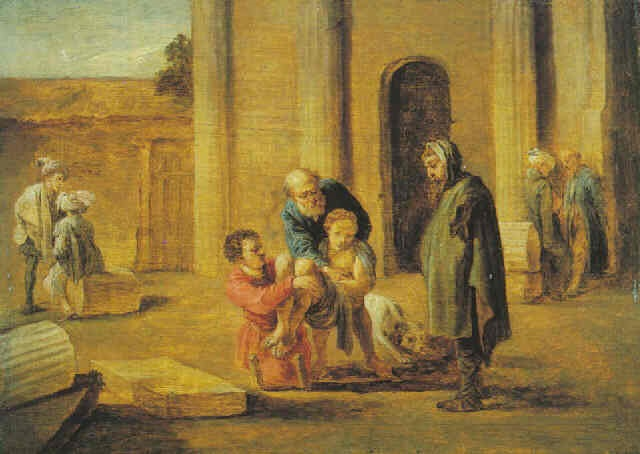
‘Antigone‘ is a tragic drama by Greek playwright, Sophocles (5th cent. B.C.). The play is set in the city of Thebes, after its King, Oedipus, has died, and a terrible battle had just been fought between Oedipus’ two sons, Eteocles and Polyneices and their forces, for rule of the city. The brothers killed each other during the battle and their uncle, Creon, becomes King of Thebes.
Creon declares that Eteocles “shall be buried and honored with all the proper rites that are due when one of our best men has fallen” since he died “fighting for this city” (lines 194-197), while Polyneices shall not be mourned nor given “a proper burial. He should be left for all to see, unburied, his body ripped to shreds by vultures and wild dogs” (line 205f) because Polyneices “was exiled from this city, but returned to burn the land of his father and the gods of his family line to the ground” (lines 199ff).
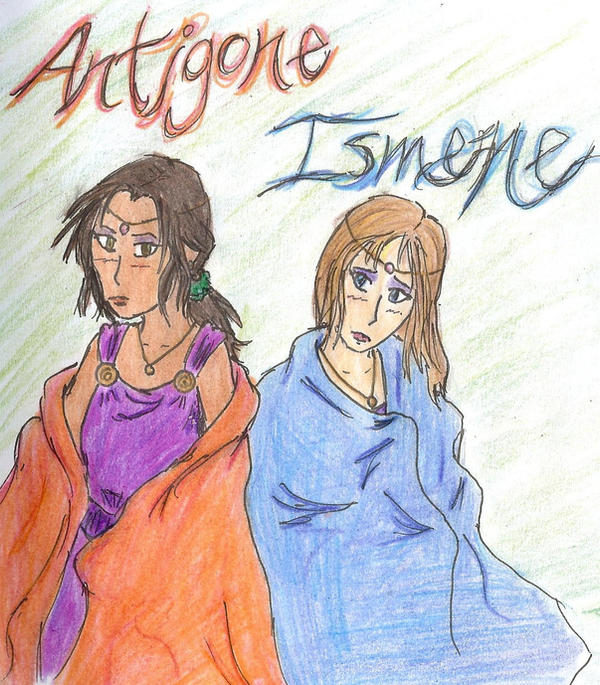
Antigone, heroine of the play, is sister to Eteocles and Polyneices, and proposes to defy Creon’s order and bury her brother Polyneices. Antigone has a private meeting with her sister, Ismene, outside the palace gates, and tells Ismene that “good Creon has denied you and me – even me – this rite” (i.e., of laying their brother in a grave; line 31f). She says to Ismene, “consider whether you’ll help me.” Responds Ismene, “help you with what? What are you thinking?” Antigone: “Will you lend this hand to bury his corpse?” Ismene: “Do you really mean to bury him, even though it’s against the law? Antigone: “I will do my part—and yours, too, if you won’t— to bury our brother. I won’t be caught betraying him.” Ismene: “How can you be so stubborn? Creon forbids it” (lines 41-47). So Ismene commiserates with her sister, but refuses to help bury Polyneices. Says Antigone,
Do what you think is right; I will bury him.
It’s a beautiful thing, to die in this act.
With him I will rest, beloved with beloved,
And I will be a god-fearing criminal. I need to please
The gods of death more than the men on Earth .. (lines 71-75)
Here is the central conflict of the drama – a contest between civic duty and religious duty. Antigone chooses to serve divine justice, as she understands it, and bury her brother. She is willing to pay the penalty of death for disobedience to the King in performing the burial rite.
[Summary of dramatic action: Antigone buries her brother, is caught and brought to Creon, who condemns her to imprisonment in a cave with a supply of food, to live or die as the gods may will. When the guards discover the burial, the body is removed from the ground, again exposed. Creon argues with his son Haemon, who is betrothed to Antigone and defends her, but is unable to persuade his father to reverse his sentence. The blind seer Teiresias arrives at the palace to convince Creon that he’s in the wrong leaving Polyneices exposed and dooming Antigone to a “shameful grave” (line 1069). Creon is disrepectful to Teiresias. Teiresias predicts deaths for Creon’s family. Creon is shaken by Teiresias’ words and consults the city council (i.e., the chorus) on what he should do. The chorus answers, “free the buried girl and bury the unburied” (line 1100f). Creon relents and proceeds to the plain of battle where Polyneices’ corpse lies. Finding the wretched body, Creon and his servants pray and wash the corpse, then set it aflame and bury the ashes. Creon advances to the rocky vault and discovers his grieving son embracing the dead Antigone, who had hung herself. Haemon attacks his father with sword but in futility as Creon runs out of the chamber; then Haemon plunges the sword into his own side, ending his life. When Creon’s wife, Eurydice, hears news of her son’s death, she too commits suicide. Creon is filled with woe and guilt. Final verses: “Wisdom is the supreme part of happiness; and reverence towards the gods must be inviolate. Great words of prideful men are ever punished with great blows, and, in old age, teach the chastened to be wise.”]
Funeral Rites
Funeral ritual takes many forms, tied to culture and religion according to the family’s wishes. Two foremost goals of a funeral are respectful disposition of the dead body and mourning.
Here is a sample of a Christian burial service, called a ‘committal,’ from a Methodist liturgy.
Into your hands, merciful God, we commend the soul of Jane Doe, as we commit Jane’s body to the ground, earth to earth, ashes to ashes, dust to dust, in sure and certain hope of life in the world to come; through our Lord Jesus Christ, who shall fashion anew our earthly body that it may be like unto his own glorious body, according to his mighty working whereby he is able to subdue all things unto himself.4
Notes
- Patrick Pester, ‘When did humans start burying their dead?‘ (livescience.com, 10/23/2023), quotation comes from Dr. Mary Stiner, anthropologist at Univ. of Arizona, Tuscon.
- Some cultures in the ancient world honored the dead by actually exposing carcasses to vultures and carnivorous animals, believing that the birds carried the soul to heaven. A list of classical writings on such practices, with translation, is assembled by Antonio Marco Martinez, ‘Exposure of corpses‘ at antiquitatem.com.
- See, Rebecca Denova, Crucifixion (worldhistory.org, 05/12/2022); “The purpose of this excruciating punishment was to emphasize the cruelty and terror of what awaited prisoners and rebels.”
- A Service of Death and Resurrection (Nashville: Abingdon, 1980), p. 89
Resources
Internet Links
Jewish funeral – https://reformjudaism.org/beliefs-practices/lifecycle-rituals/death-mourning/what-expect-jewish-funeral
Muslim funeral – https://www.funeralguide.co.uk/help-resources/arranging-a-funeral/religious-funerals/muslim-funerals
Protestant funeral – https://www.thirdpresbyterian.org/wp-content/uploads/2020/01/Third-Presbyterian-Church-Memorial-Service-Planning.pdf
Catholic funeral – https://www.usccb.org/prayer-and-worship/sacraments-and-sacramentals/bereavement-and-funerals/overview-of-catholic-funeral-rites
Funeral in world religions – https://religionmediacentre.org.uk/factsheets/death-funeral-rituals-in-world-religions/
Secular funeral – https://ffrf.org/timely-topics/secular-memorials-and-funerals-without-god/
Books
Whitney J. Oates and Eugene O’Neill Jr. (eds.), Seven Famous Greek Plays (NY: Vintage, 1950)
Bernhard Zimmermann, Greek Tragedy: An Introduction [tr. Thomas Marier] (Baltimore: Johns Hopkins, 1993)
Laura Swift, Greek Tragedy (London: Bloomsbury, 2016)
Otto Kaiser, The Old Testament Apocrypha: An Introduction (Peabody: Hendrickson, 2004)


 Paul's Place for Writing
Very interesting post. The line that made me smile was Spock: “By dealing with first things first, I hope to increase our chances of staying alive.” Spoken in his true character. This is a really interesting and important topic. Thanks for posting. It’s true that visiting gravesites of loved ones make them feel closer.
Joseph gave his fatherJacob a state funeral that lasted several days.
It is fascinating that Jesus, aware of these burial traditions said, in Luke 9:60 “Let the dead bury their own dead, but you go and preach the kingdom of God”, but John the Baptist was buried by his disciples. Michael and the devil disputed over Moses’ body. (Jude 9) Apparently God conducted a very private funeral. Thanks again.
Hi Jacquie, you’re welcome and thanks for reading. Yes Jacquie, Jesus of Nazareth had an odd view of death and burial compared to usual social standards and especially to the traditions of the Bible and Judaism, wherein burial is so important. I chose not to say anything about our Lord’s sayings on this subject in this post, but would like to study and explore further Jesus on death. Jesus Christ seems to discount death and burial in various ways in the gospels, especially John 11:25-26. You are blessed, Jacquie, by God’s graciousness.