Zionism is a political ideology and movement, started in the nineteenth century in Europe, advocating for establishment of a Jewish national homeland. Its founder is TheodorHerzl (1860-1904). It is partly a reaction to European anti-semitism and also based on Judaism, a religion which goes back to Biblical times. In Judaism, as in Hebrew Bible, ‘Zion’ refers to the hills upon which Jerusalem is built or Jerusalem itself or the entire Jewish nation. Jerusalem had been a Canaanite (Jebusite) stronghold, until capture by King David1 around 1000 B.C., who turned it into the capital of Israel. In Jerusalem, David’s son, King Solomon (reigned c. 970-931 B.C.), built the Temple of YHWH, God of Israel, and so ‘Zion’ is a sacred word throughout the Hebrew Bible,2 with special significance in Jewish thought. Since the Roman destruction of the Jerusalem Temple in 70 A.D., return and restoration of Zion has been a focus of Jewish prayer and ritual.
Israel: Ancient and Modern
Modern-day Israel became an independent Jewish state in 1948, when British rule ended. Land of Palestine had been part of Ottoman Empire for centuries which ended after World War I, when The League of Nations assigned government of the land to Great Britain. Successor to League of Nations, United Nations, approved a partition plan for Palestine in 1947 which resulted in war between Jews and Arabs in the land. A 1949 armistice between Israel, Egypt, Jordan, Lebanon, Syria, ended that conflict and established boundaries of Israel with the West Bank of Jordan River and Gaza Strip in Arab hands, namely, Jordan and Egypt. Since 1949, numerous military conflicts (especially in 1967 and 1973) involving Israel and surrounding countries have occurred and various treaties and accords have been signed. The 1948 declaration of Israel nationhood and independence was led by David Ben-Gurion, head of World Zionist Organization, who became first Prime Minister of Israel. National Anthem of Israel, ‘The Hope,’ makes mention of two-thousand years of Jewish hoping for return to “Zion,” “to be a free people in our land.” The Flag of Israel, featuring Star of David in blue in its center was adopted from that of World Zionist Organization.
There is spiritual continuity between modern Israel and ancient Israel, a confederation of twelve tribes with various judges, who eventually chose kings to rule over them; but many in today’s world (2023 A.D.) do not grant Jews any natural right to Palestine.
For/Against Israel
Zionists today support Israel in many ways. Zionist agendas are embraced by some Israeli political parties, particularly Likud, led by Benjamin Netanyahu. Many Christians, especially in the western world, support Israel, since the Old Testament coincides with Hebrew Bible.3 Both contain God’s promise to Israel, its ancestors, such as Abraham, and the tribes who followed Moses out of Egypt, of Canaan, “a land flowing with milk and honey.”4 Of course, there are variations in Christian support. Understanding a divine right in Israel’s statehood, does not entail agreement with all its policies and actions.
There is much unrest and protest in U.S. over Israeli military incursion into Palestinian territories, Gaza and West Bank. The United States Constitution recognizes a right to free speech, so criticism of Israel is certainly allowed, but there are different motives for such protests which presents a problem for understanding and agreement or disagreement. Some is fueled by antisemitism, which is akin to racism and should not be accepted. Some is motivated by total anti-Israel sentiment, not recognizing Israel’s right to exist; it should be conquered and the land returned to Palestinian residents.5 Some protest comes from humanitarian reason; too many civilians, not members of Hamas,6 are being killed and basic supplies for civilian life are dwindling. Some protest against Israel war on Hamas comes from Jewish groups backing Palestinian rights on the bases of progressive principles of human dignity and justice.7 Some has its source in Arab-Jew rivalry based on religious teachings of Muhammad and Quran and Jewish reaction.
The Israel-Palestine conflict is an intractable problem in world-politics. So many leaders, nations and groups have tried to solve it. When the longer history of ‘Zion’ is considered, going back to Moses’ aide, Joshua (Joshua chap. 1), a violent record of killing and battle upon battle presses on human consciousness. It is no wonder that the Book of Revelation, final writing of Christian Bible, says “the kings of the whole world” will assemble for “battle on the great day of God the Almighty” “at the place which is called in Hebrew Armageddon” (Rev 16:14-16), that is, Megiddo, a fortified city of Palestine going back some three-thousand years before Christ. At that future battle, “the seventh angel poured his bowl into the air, and a loud voice came out of the temple, from the throne, saying, ‘It is done!”’ (Rev 16:17)
This view may be reasonable for Palestinians themselves and their families who were driven from their land and non-Palestinian supporters who consider Israel a usurper. See online article, ‘What are the roots of the Israel-Palestine conflict?‘
Hamas (Arabic acronym for ‘Islamic Resistance Movement’) is a long-standing organization (founded 1987) of Palestinians committed to “the destruction of Israel.” See, ‘What is Hamas?‘ This group attacked Israel on October 7, precipitating the current war.
Hannah Arendt, The Jew as Pariah [ed. Ron Feldman] (NY: Grove Press, 1978) – “Peace in the Near East is essential to the State of Israel, to the Arab people and to the Western world. Peace, as distinguished from an armistice, cannot be imposed from the outside, it can only be the result of negotiations, of mutual compromise and eventual agreement between Jews and Arabs.” (p. 193)
Aharon Cohen, Israel and the Arab World (Boston: Beacon Press, 1976) – “Nations must learn from their life experience. The June 1967 war and the October 1973 war, as well as the years in between, have clearly proved that the Arabs cannot destroy Israel and Israel cannot impose peace on the Arabs by force. Two alternatives face these two peoples: either to recognize each other’s legitimate rights and aspirations, or to perpetuate endless struggle, resulting in death and destruction on both sides.” (p. 391)
Matthew Clancy, The Promised Land (Ann Arbor: Servant, 1978) – “… the Bible recounts the great events of the Patriarchal, Mosaic, and Davidic periods. It traces the history of God’s chosen people, the Hebrews, from the days of the Patriarchs through the Egyptian captivity and the exodus. It then follows that nation through the conquest of the Promised Land and the disorganization that ensued there. In time we encounter David and witness the formation of his kingdom. Finally, we arrive at the beginning of the reign of Solomon. The pervading theme of these centuries is that of persevering faith, faith in the ever-present patronage of God and in his promises.” (p. xii)
Latest issue of HealthU, a free quarterly magazine published by Hackensack Meridian Health, has a one-page article on self-improvement about the benefits of weight training. I have some weights at home which I use in exercise Monday through Friday. I have a brief routine (10 minutes or less) which I’ve been doing since I went to work for UPS in 2004, a job which requires heavy lifting. I’m 67 years old now and retired from UPS, but I continue with this routine. The HealthU piece caught my eye because it helps to explain why I do strength training. Here, briefly, are five benefits of strength training according to the magazine.
1. Increased muscle mass
2. Improved metabolism
3. Improved bone health
4. Decreased injury risk
5. Reduced symptoms
Knowing these pluses of weight or strength training aids self-understanding for anyone so engaged. Also, I remind readers that strength training may be done without weights. One can use his or her body, your own weight, to get stronger, in workouts with push-ups or pull-ups.
In closing, remember this advice from apostle Paul. “For physical training is of some value, but godliness has value for all things, holding promise for both the present life and the life to come” (1 Tim 4:8, NIV). The human body is a temple for the Spirit of God, so stay in shape.
The movie, ‘Lion,’ was released in 2016 and was successful financially and in popularity and was nominated for numerous Academy Awards in U.S. The movie is based on fact. A little boy, maybe five years old, is separated (by accident) from his older brother, about fourteen, at a train station in their native India and becomes lost. Little boy, named Saru,1 boards a train, looking for elder brother (named Guddu) and ends up almost a thousand miles away from his home village (Ganesh Talai) in city of Calcutta, where he is sent to an orphanage and adopted by an Australian couple, after attempts to find Saru’s natural family failed.
Saru grew to be a man in Australia, in island state Tasmania, but never forgot his native land or his first family, his mother and siblings, especially older brother, Guddu. They had been a very poor family, but had much love between them.
Saru became Saroo Brierley in Australia, where he was raised in a loving family, parents Sue and John, and another Indian boy they adopted, Mantosh. At age of thirty, with the help of his Mum, friends, wall-maps and internet resources over the years, Saroo identified his home village as part of Indian city Khandwa and made plans to return there to find his birth-mother, Kamla and brothers and sister. In 2012, Saroo traveled to India and found Kamla and siblings. In 2013, Saroo authored a book about his experiences, A Long Way Home (title changed to Lion). Saroo’s birth-mother, Kamla, said, “she was ‘surprised with thunder’ that her boy had come back, and that the happiness in her heart was ‘as deep as the sea’.”2
Death, Loss and Mourning
Amidst the joy and accompanying emotions of reuniting with his original family after twenty-five years, Saroo received “the hardest news I’d ever hear. When I asked my mother about [Guddu], she replied sadly, ‘he is no longer’.”3 In the movie, a man nearby translates, “Guddu is no more. He is with . . . God.”
“Guddu had also never returned that night I was lost. My mother found out a few weeks later that he had died in a train accident at age fourteen. She had lost two sons on the same night. I couldn’t imagine how she had borne it.”4
“A few weeks, possibly a month, after our disappearance, a policeman came to the house. He said that Guddu had died in a railway accident and showed her a photo of his body. Guddu was found by the tracks about a kilometer outside Burhanpur (this was the station where the brothers were separated), and the policeman was there to ask her to formally identify him. Half of one of his arms had been severed and he had lost one of his eyes–an unimaginably horrific thing for a mother to have to look at.”5
“I wanted to visit Guddu’s grave, but my family told me that wasn’t possible–houses had been built over the graveyard he was in.. We didn’t even have any photographs of Guddu, as we could never afford family portraits. He had been part of us as we had been part of him, and now all that remained of Guddu were our memories.”6
“I wasn’t sure if my family entirely understood why I was so upset.. For them, Guddu’s death was long in the past, but for me his death happened suddenly that very day. Not being able to properly grieve for my departed brother was a deep-seated loss that I felt strongly long after I returned to Australia. The last thing he said to me on that platform in Burhanpur was that he would be back. Perhaps he’d never returned; perhaps he’d come back to find me gone. Either way, I’d hoped to be able to be reunited with him. Now I’ll never know what happened that night–some of our mysteries will never be solved.”7
Mysteries incapable of solution are profound things, things to ponder, and death is one of them.
Conclusion
The film goes surreal in its penultimate scene showing the Saroo character walking on the local train tracks with changing expressions on his face looking ahead, until forthwith his fourteen year old brother, Guddu, appears. Guddu looks at Saroo seriously for some moments, then smiles and tells him “come on.” Next, you see the two brothers, Guddu and Saru (now five years old again) walking and playing along the tracks. This is memory and it is surreal. It can’t be real, can it?
When a loved one dies, is lost, the interchange of memory and present sadness makes up what is called mourning. A person recalls experiences, times together with the dead one, when that one was living. In spirit, the memory transforms the mourner back into past times in an effort toward understanding and some happiness.
Mourning is a special state to be in. Memories of the past with the dead one are tinged with emotion.
According to Jesus of Nazareth, “blessed are they that mourn” (Mt. 5:4), which means the living and the dead are included together in a specially good way or connection.
Saroo’s book is dedicated “for Guddu.”
Actors playing parts of Guddu and Saru
Real Saru
Notes
‘Saru’ was the young boy’s mispronunciation of his actual name, ‘Sheru,’ meaning, ‘lion.’ See, Saroo Brierley (with Larry Buttrose), Lion (NY: NAL, 2013), p. 201
I said to the Lord, “haven’t I borne this cross long enough?” The Lord replied, “no, you’re not dead yet.” [Wisdom is with God and he hath imparted a little to me. Someone might say, ‘very little.’]
The Lord giveth strength for perseverance, thanks be unto our Lord (1 Chron 16:11).
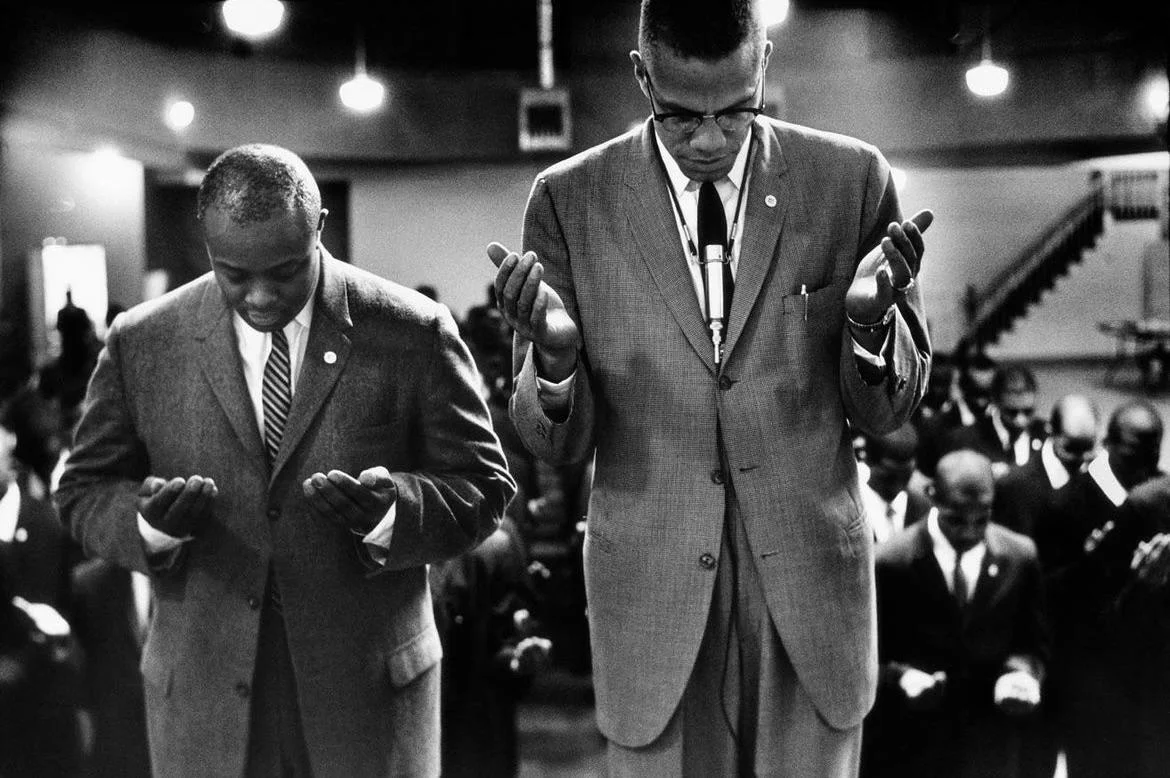
Politics is the way persons and groups relate to each other intentionally to affect government. Voters voting is political behavior; citizens not voting is political non-action; a mayor talking to a fire-chief over the phone is politics. Political activism by individuals not officially part of government has been going on since cities, states and nations arose in ancient times. It isn’t unusual for politics to mix with religion in the history of political activism and this was the case for Malcolm X, a Muslim family man (wife and six children), who made more speeches than can be counted for his cause of “complete freedom, complete justice, complete equality”1 for black people in America. These three aspects of Malcolm X’s objective were to be accomplished “by any means necessary,”2 a phrase and moral principle found here and there in his speeches and interviews. Malcolm X was willing to plan and direct extreme measures in organizing the black community, if necessary. This radicalism was part of his understanding of the situation of black folk in America in the 50s and 60s and also part of his grasp of Islam.
1963, Malcolm X leads prayer in a Chicago mosque
Marcus Garvey
Marcus Garvey (1887-1940) founded the Universal Negro Improvement Association, stressing unity between Africa and blacks across the world, an end to foreign rule in Africa and one government for the entire African continent. Garvey advocated return to Africa for black people living outside that land.
Both of Malcolm X’s parents, Earl Little (a Baptist preacher) and Louise (from West Indies) were members of Garvey’s Association and avid volunteers spreading Garvey’s message through Nebraska (where Malcolm X was born, 1925), Wisconsin, Indiana, Michigan, as the family moved from place to place. Earl Little and his family were harassed by whites (KuKluxKlan or similar groups) and Earl died under suspicious circumstance, run over by a streetcar in 1931.3 Louise Little, widow, had difficulty caring for her children, suffered a mental breakdown in 1938 and spent over twenty years in a state mental facility. The children were sent to foster homes.
Charlestown State Prison/Norfolk Prison
In 1941, Malcolm X moved to his older sister Ella’s home in Boston and in 1946 was convicted of grand larceny and sentenced to ten years of jail. In prison, Malcolm X discovered the Nation of Islam and reformed his ways, following the strict moral code promulgated by Elijah Muhammad. In Charlestown and then Norfolk prison (transferred in 1948), Malcolm X became a consummate reader, even before his religious conversion, delving into dictionaries and language, history, religion, philosophy. He corresponded with Elijah Muhammad, absorbing the principles of Nation of Islam. Malcolm X joined the Norfolk debate team. Malcolm X is an exemplar of a self-educated and reformed man, with the help of Allah, who became one of the finest orators of United States of America.
Separation from the White Devil
Malcolm X was paroled in 1952 and quickly went to Detroit, living with his brother Wilfred while both attended Nation of Islam (NOI) Temple No. 1 there. Malcolm X became a Temple leader, its membership increasing under his influence. Soon he was given more authority and responsibility by Elijah Muhammad and sent to Boston and big cities along the east coast to draw new members to NOI temples, eventually being appointed chief minister of Temple No. 7 in Harlem (in 1954). NOI rolls increased by thousands upon thousands with Malcolm X’s rhetorical skill and impetus (e.g., he helped start NOI newspaper Muhammad Speaks). His speeches were full of NOI doctrine.
Says Elijah Muhammad, “Read and study the above chapter of John 8:42, all of you, who are Christians, believers in the Bible and Jesus, as you say. If you understand it right, you will agree with me that the whole Caucasian race is a race of devils. They have proved to be devils in the garden of Paradise and were condemned 4,000 years later by Jesus. Likewise, they are condemned today, by the Great Mahdi Muhammad, as being nothing but devils in the plainest language. The so-called American Negroes have been deceived and blinded by their unlikeness, soft-smooth buttered words, eye-winking, back-patting, a false show of friendship and handshaking.”4
Elijah Muhammad spoke to some ten-thousand black Muslims at Uline Arena, Washington D.C., in 1959 and was introduced by Malcolm X. Said Malcolm X, “everyone who is here today realizes that we are now living in the fulfillment of prophecy. We have come to hear and to see the greatest and the wisest and most fearless black man in America today. In the church we used to sing the song ‘good news, the chariot is coming’ – is that right or wrong – but what we must bear in mind that what’s good news to one person is bad news to another. While you sit here today knowing that you have come to hear good news, you must realize in advance that what’s good news for you might be bad news for somebody else. What’s good news for the sheep might be bad news for the wolf.”5
A 1959 interview with Malcolm X by reporter, Louis Lomax, begins with Lomax asking Malcolm X to clarify Elijah Muhammad’s teaching about the snake in the garden of Eden. Malcolm X said, “well, number one, he teaches us that that never was a real serpent that went into the garden. As you know, the Bible was written in symbols and parables and this serpent or snake is a symbol that’s used to hide the real identity of the one whom that actually was – the white man.”6
Understanding that whites are bad, members of NOI separated themselves from the larger society as much as possible and separation and segregation were taught by Elijah Muhammad and Malcolm X. Says Elijah Muhammad, “What we must understand today is the importance of acquiring land of our own. We are no longer a mere handful of people. We are a little better than 22 million in population and still increasing.”7 “We cannot be successful in the house of our enemies; we should be in our own house.”8 “Integration means self-destruction..”9 “In order to build a nation you must first have some land. From our first generation of slaves to the present generation of our people, we have been unable to unite and acquire some land of our own due to the mental poisoning of our former slave-masters, who destroyed in us the desire to think and do for self and kind.”10
Elijah Muhammad
Here are a few quotations from Malcolm X.11
Speech at Harlem Freedom Rally, 1960
Again I repeat, we are not gathered here today because we are Muslims or Christians, Protestants or Catholics, Baptists or Methodists, Democrats or Republicans, Masons or Elks…but because as a collective mass of black people we have been colonized, enslaved, lynched, exploited, deceived and abused. As a collective mass of black people we have been deprived, not only of civil rights, but even our human rights, the right to human dignity…the right to be a human being!
Speech at Queens College, 1960
The Creator of the Universe, whom many of you call God or Jehovah, is known to the Muslims by the name Allah. Since the Muslims believe all prophets came from that one God and therefore all taught one and the same religion, rightly called Islam, which means the complete submission and obedience to Allah. One who practices this Divine Obedience is called a Muslim..
Mr. Elijah Muhammad is our Divine Leader and Teacher here in America. He believes in and obeys God 100 per cent and is teaching and working among us to fulfill God’s Divine Purpose. What is this purpose? God’s purpose today, just as it was in biblical days, is the complete separation of the so-called Negroes from their slave master… as the bible says concerning today: “Let every man be under his own vine and fig tree.”
Debate with Bayard Rustin, 1960
Any religion that does not take into consideration the freedom and the rights of the black man is the wrong religion. But politics as such is not the solution. But the divine solution would have to have that ingredient in it. You can call it politics if you want, but the overall problem of the so-called Negro in America is not a political problem as such, it is an economic problem, a social problem, a mental problem, and a spiritual problem. Only God can solve the whole problem.
Speech at Yale Law School, 1962
Let us take the advice Paul gave in the Bible; let us toss our emotions aside and reason together. Let us look closely at this chaotic world picture before us, and in the light of the facts let us then determine if Mr. Muhammad’s divine solution fits the picture before us.
Never before has America made so many crucial blunders, one after another, and suffered such great loss of prestige in the eyes of the world, despite the advice of her expert advisors.
The U-2 spy plane incident caused the President of the strongest country on earth to be tricked, trapped and exposed before the whole world as a liar…despite the advice of expert advisors.
At the Paris Summit Conference, the same President was cursed, ridiculed, and humiliated again before the eyes of the entire world…despite the advice of his expert advisors.
In Korea, students, mere children, toppled the government of Syngman Rhee, the best friend America had in the Far East, despite the advice of her expert advisors.
In Turkey, children toppled the government of Menderes, America’s best friend in the Middle East…despite the advice of expert advisors.
In Tokyo, students, mere children again, defied the President to come to Japan, and blocked him from entering after he had traveled thousands of miles from home and had arrived at their back door…a most humiliating insult…despite the advice of his expert advisors.
And Cuba, a little midget island government in the Caribbean, is challenging Giant America, accusing her of economic aggression, confiscating all of her investments, and getting unexpected support from Mexico and other strategically located Latin American countries…and all of this, despite the advice of her expert advisors.
My friends, if the expert politicians, the expert theologians, the expert diplomats and other scientists, professors and scholars have failed to devise a solution to these grave world problems, surely you will agree that it is now time for God to send us someone with a solution from Himself.
Is Mr. Muhammad from God? Is he on time? Does his divine solution fit the events of today?
Chickens Come Home to Roost
In November 1963, U.S. President John Kennedy was shot and killed in Dallas, Texas (r.i.p. JFK). This was a shock to the country and caused much grief and sorrow as Kennedy was well-liked. Elijah Muhammad ordered his ministers not to comment on Kennedy’s assassination, but Malcolm X did so at a public meeting he addressed at Manhattan Center, NYC on Dec. 1, 1963. After his speech, entitled ‘God’s Judgment of White America,’ Malcolm X took questions from reporters and replied to a query about the President’s assassination that it was a case of “chickens coming home to roost,” meaning something like ‘he got what he deserved.’ This disobedience was relayed to Elijah Muhammad who suspended Malcolm X from public speaking for three months.
During the next three months, through back and forth between himself and Elijah Muhammad, Malcolm X learned that his suspension might be prolonged and he might be removed from leadership in NOI altogether.12 On March 8, 1964, Malcolm X announced he was exiting NOI. March 12, he held a press conference, giving a short talk on his split from NOI and that he was starting his own mosque, ‘Muslim Mosque, Inc.’ This move by Malcolm X involved significant changes in his approach to black liberation. His mosque would make room for “all Negroes in our political, economic, and social programs, despite their religious or non-religious beliefs;” his mosque will enter electoral politics, “we will organize, and sweep out of office all Negro politicians who are puppets of the outside forces;” his mosque will allow help from whites, “whites can help us, but they can’t join us;” he is willing to work with “other Negro leaders or organizations . . . we must find a common approach, a common solution, to a common problem.” These ideas are quite different from teachings and practices of NOI.
Malcolm X Becomes an International Muslim
In April 1964, Malcolm X delivered a speech, ‘The Ballot or the Bullet,’ twice, each slightly different from the other, at Cory Methodist Church in Cleveland (April 3) and King Solomon Baptist Church in Detroit (April 12). On April 13, Malcolm X left U.S. for a trip abroad to Saudi Arabia and African nations, Egypt, Sudan, Kenya, Tanzania (Tanganyika and Zanzibar), Nigeria, Ghana, Algeria. This journey was a life-changing experience for Malcolm X in that he joined Sunni13 Muslim world community and discovered firsthand in talks with African leaders how an African revolution was taking place discarding the shackles of western colonialism.
Lessons Learned
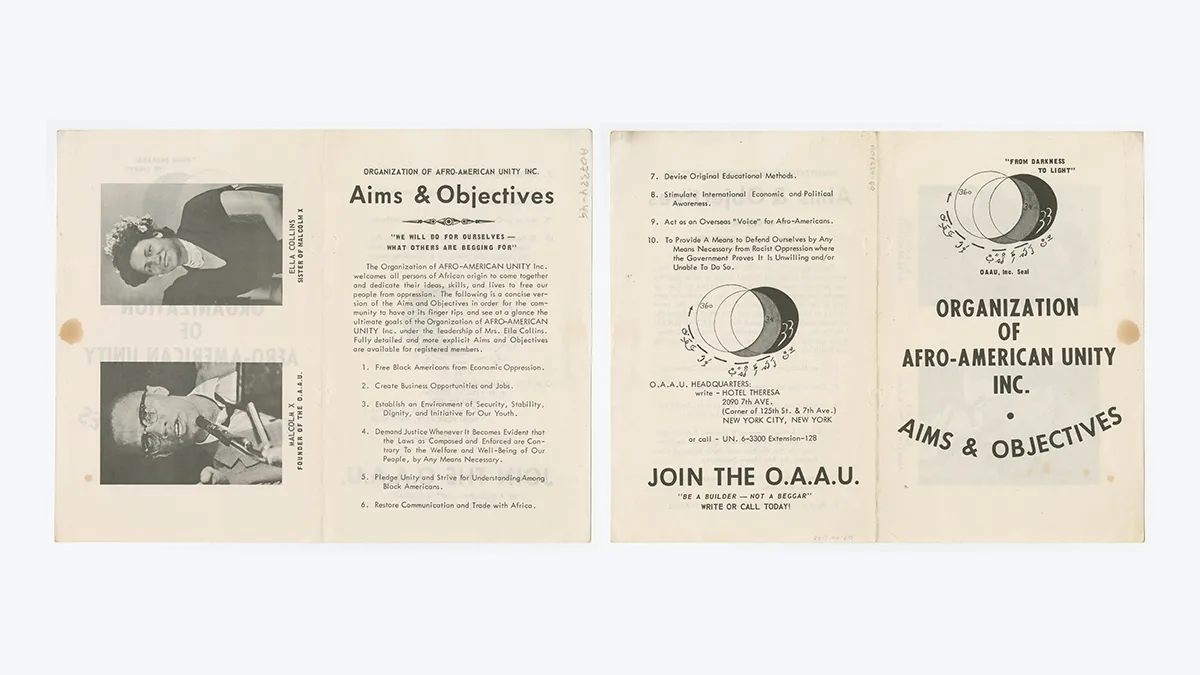
Two lessons learned by Malcolm X were that white people were not devils per se and that the civil rights struggle of Afro-Americans should be connected to the worldwide movement of oppressed peoples for freedom. He founded Organization of Afro-American Unity in June, 1964 and embarked on a five-month trip to Arabia and Africa in July, participating in the second conference of the OAU, Organization of African Unity, in Cairo. Malcolm X’s trips abroad had a profound effect on his heart and mind, confirming and pushing him further along the path he had already begun in the split from NOI. Here are some words from Malcolm X, all coming after his sacred pilgrimage (hajj) to Mecca.
Never have I witnessed such sincere hospitality and overwhelming spirit of true brotherhood as is practiced by people of all colors and races here in this Ancient Holy Land, the home of Abraham, Muhammad and all the other Prophets of the Holy Scriptures. For the past week, I have been utterly speechless and spellbound by the graciousness I see displayed all around me by people of all colors.
I have been blessed to visit the Holy City of Mecca. I have made my seven circuits around the Ka’ba, led by a young Mutawaf named Muhammad. I drank water from the well of the Zam Zam. I ran seven times back and forth between the hills of Mt. Al-Safa and Al-Marwah. I have prayed in the ancient city of Mina, and I have prayed on Mt. Arafat.
There were tens of thousands of pilgrims, from all over the world. They were of all colors, from blue-eyed blonds to black-skinned Africans. But we were all participating in the same ritual, displaying a spirit of unity and brotherhood that my experiences in America had led me to believe never could exist between the white and non-white.
America needs to understand Islam, because this is the one religion that erases from its society the race problem. Throughout my travels in the Muslim world, I have met, talked to, and even eaten with people who in America would have been considered ‘white’–but the ‘white’ attitude was removed from their minds by the religion of Islam. I have never before seen sincere and true brotherhood practiced by all colors together, irrespective of their color.
You may be shocked by these words coming from me. But on this pilgrimage, what I have seen, and experienced, has forced me to re-arrange much of my thought-patterns previously held, and to toss aside some of my previous conclusions. This was not too difficult for me. Despite my firm convictions, I have always been a man who tries to face facts, and to accept the reality of life as new experience and new knowledge unfolds it. I have always kept an open mind, which is necessary to the flexibility that must go hand in hand with every form of intelligent search for truth.
During the past eleven days here in the Muslim world, I have eaten from the same plate, drunk from the same glass, and slept in the same bed (or on the same rug)–while praying to the same God–with fellow Muslims, whose eyes were the bluest of blue, whose hair was the blondest of blond, and whose skin was the whitest of white. And in the words and in the actions in the deeds of the ‘white’ Muslims, I felt the same sincerity that I felt among the black African Muslims of Nigeria, Sudan, and Ghana.
We were truly all the same (brothers)–because their belief in one God had removed the white from their minds, the white from their behavior, and the white from their attitude.
I could see from this, that perhaps if white Americans could accept the Oneness of God, then perhaps, too, they could accept in reality the Oneness of Man–and cease to measure, and hinder, and harm others in terms of their ‘differences’ in color.
So we have formed an organization known as the Organization of Afro-American Unity which has the same aim and objective to fight whoever gets in our way, to bring about the complete independence of people of African descent here in the Western Hemisphere, and first here in the United States, and bring about the freedom of these people by any means necessary.
That’s our motto. We want freedom by any means necessary. We want justice by any means necessary. We want equality by any means necessary. We don’t feel that in 1964, living in a country that is supposedly based upon freedom, and supposedly the leader of the free world, we don’t think that we should have to sit around and wait for some segregationist congressmen and senators and a President from Texas in Washington, D.C., to make up their minds that our people are due now some degree of civil rights. No, we want it now or we don’t think anybody should have it.
Many of you probably read last week I made an effort to go to Paris and was turned away. And Paris doesn’t turn anybody away. You know anybody is supposed to be able to go to France, it’s supposed to be a very liberal place. But France is having problems today that haven’t been highly publicized. And England is also having problems that haven’t been highly publicized, because America’s problems have been so highly publicized. But all of these three partners, or allies, have troubles in common today that the Black American, or Afro-American, isn’t well enough up on.
And in order for you and me to know the nature of the struggle that you and I are involved in, we have to know not only the various ingredients involved at the local level and national level, but also the ingredients that are involved at the international level. And the problems of the Black man here in this country today have ceased to be a problem of just the American Negro or an American problem. It has become a problem that is so complex, and has so many implications in it, that you have to study it in its entire world, in the world context or in its international context, to really see it as it actually is. Otherwise you can’t even follow the local issue, unless you know what part it plays in the entire international context. And when you look at it in that context, you see it in a different light, but you see it with more clarity.
And you should ask yourself why should a country like France be so concerned with a little insignificant American Negro that they would prohibit him from going there, when almost anybody else can go to that country whenever they desire. And it’s primarily because the three countries have the same problems. And the problem is this: That in the Western Hemisphere, you and I haven’t realized it, but we aren’t exactly a minority on this earth. In the Western Hemisphere there are — there’s the people in Brazil, two thirds of the people in Brazil are dark-skinned people, the same as you and I. They are people of African origin, African ancestry — African background. And not only in Brazil, but throughout Latin America, the Caribbean, the United States, and Canada, you have people here who are of African origin.
Many of us fool ourselves into thinking of Afro-Americans as those only who are here in the United States. America is North America, Central America, and South America. Anybody of African ancestry in South America is an Afro-American. Anybody in Central America of African blood is an Afro-American. Anybody here in North America, including Canada, is an Afro-American if he has African ancestry — even down in the Caribbean, he’s an Afro-American. So when I speak of the Afro-American, I’m not speaking of just the 22 million of us who are here in the United States. But the Afro-American is that large number of people in the Western Hemisphere, from the southernmost tip of South America to the northernmost tip of North America, all of whom have a common heritage and have a common origin when you go back to the roots of these people.
February 21, 1965, Malcolm X was shot down at the podium and lectern at Audubon Ballroom (NYC) as he was beginning his address for an OAAU meeting. His wife and children were present in the audience. A bodyguard tried to resuscitate him, his wife Betty Shabazz, knelt to resuscitate him, but it was too late.
Bullet holes at crime scene marked with circles
Malcolm X was pronounced dead at Columbia-Presbyterian Hospital, 3:30pm.
Then and Now
A white person seeking understanding of Malcolm X in 2023 might have a different approach and perspective than that same person in 1965. In 1965, a white man or woman likely would have been afraid of Malcolm X and his milieu. Fear would lead one to avoid whatever is its cause, but if “fear of the LORD is the beginning of wisdom” (Prv 9:10), then danger ought be recognized as a thing worth knowing. Then, on the basis of wisdom or understanding, one can decide whether the danger is to be pushed away or kept near. Malcolm X was a dangerous man and a man of courage.
Notes
[Malcolm X, ‘The Power of Africa‘] in Joanne Grant (ed.), Black Protest (NY: Fawcett, 1989), “Malcolm X at the Audubon” [speech 12/20/64] p. 449
Ibid.
This happened in Lansing, where the Little family was then living. Earl Little’s death was officially ruled accidental, but Malcolm X mentions rumors in town that his father was attacked by white racists. See, The Autobiography of Malcolm X as told to Alex Haley (NY: Ballantine, 1973/1999), pp. 19, 22
Elijah Muhammad, Message to the BlackMan in America (USA, 1973), chap. 13, 1-2
In 632 A.D., when prophet Muhammad died, there was a division over who was to succeed him as leader (caliph). Some said the successor should be Abu Bakr, Muhammad’s friend and advisor, others that the leader should be someone from the prophet’s family, his cousin Ali. Thus was produced the two major parties or groups, Sunni and Shia, that still make up Islam today. See the article, ‘Key Differences Between Shia and Sunni Muslims‘ or ‘What is the Difference between Sunni and Shia Islam?‘ Sunnis make up a far greater percentage of world Islam population, including Arabia, where most sacred sites are located.
Resources
There is much material on Malcolm X on the internet, some unreliable. A valid research method is to find independent sources to confirm facts such as dates and events or what was actually said. A lot of his speeches, etc., were filmed or recorded and may be accessed on YouTube. Columbia University Malcolm X Project may be helpful, though it seems the site has languished since the death of its leader, Prof. Manning Marable in 2011. Another website, no longer active, but which contains a wealth of primary sources on Malcolm X, letters, interviews, etc., is malcolm-x.org.
Three Books
George Breitman, The Last Year of Malcolm X (NY: Pathfinder, 1992)
Michael Dyson, Making Malcolm (NY: Oxford, 1995)
Bruce Perry, Malcolm (Barrytown: Station Hill, 1991)
Definition: “a concise statement of a principle; a terse formulation of a truth or sentiment” (Merriam-Webster)
Book: James Geary, Geary’s Guide to the World’s Great Aphorists (NY: Bloomsbury, 2007)
Geary’s book (437pp.) is a compendium of famous speakers and writers who have authored sentences containing information worth knowing or pondering. Each author is introduced with their dates and a brief biography and then a listing of their “essential aphorisms.” The book has eight chapters which classify the authors according to subject matter or area of expertise. These are “Comics, Critics and Satirists” (59pp.), “Icons and Iconoclasts” (41pp.), “Moralists, Major and Minor” (72pp.), “Novelists and Playwrights” (37pp.), “Old Souls and Oracles” (41pp.), “Painters and Poets” (56pp.), “Philosophers and Theorists” (41pp.), “Strange Beasts” (35pp.). The book ends with two indices, an “Index of Aphorists” and an “Index of Themes.”
“Strange Beasts”
“Some aphorists resist easy categorization,” says Geary (p.356). Nineteen authors are included in this chapter.1 Here we look at three of these writers and comment upon only two each of their aphorisms.
Ambrose Bierce (1842-1914)
Bierce was a U.S. citizen who had fought in the Civil War. “In 1880, Bierce began writing a column for the Wasp newspaper called ‘The Devil’s Dictionary’.”
Aphorism, n. Predigested wisdom.
It seems there are two ways Bierce’s definition of aphorism may be taken or understood. One is that an aphorism represents raw knowledge/information that someone has analyzed and put forth to guide others. Another is that an aphorism imparts potential wisdom dependent on the hearer’s (or reader’s) own interpretation. Either way, it’s clear that Bierce associates aphorism with wisdom.
Day, n. A period of twenty-four hours, mostly misspent.
One finds humor in this definition by Bierce, but also truth. There is something wrong or out of order in much human action. Why? One might think of the Christian doctrine of original sin, or the number one Noble Truth of Buddhism that ‘life is suffering.’ Also, there are psychological explanations of human misbehavior, explored in depth by Freud and Jung. A question needs to be asked: how much evil is too much?
Diogenes (404-323 B.C.)
Diogenes was a Greek philosopher who “was captured at sea and sold into slavery.” “The only worthwhile philosophy, he believed, was one that helped people live a good life in the here and now.”
Practice makes perfect.
Perfection is a concept of a future state that is to be attained. If one cannot reach perfect status, one at least wants to come as close to perfect as possible. Practice, trying out the particular action requisite for the desired goal, doing it over and over, will lead to perfection, said Diogenes.
To own nothing is the beginning of happiness.
Diogenes herein captures an ideal of much philosophy, political thought and religious teaching. Privately owned property is a practical fact throughout the world, but philosophers such as Thomas Hobbes and David Hume reasoned that property rights were not part of the natural, original state of humankind, but arose in conjunction with the origin of cities and states. In the realm of political theory, Karl Marx’s writings criticizing capitalism led to communism in some countries, wherein the state, rather than individuals, owns and distributes goods. In primitive Christianity, community property was favored over personal property, a practice which is maintained somewhat among the clergy in churches, but especially in monasteries. The founder of Buddhism himself cast away all attachment to things and counselled non-attachment to followers. It does seem that ownership entails responsibility, which carries along many problems. The planet’s population needs the planet’s resources which involves issues of justice and equity. A person who owns nothing would need others to provide for him or her and to be happy would first, be meek and humble.
Franz Kafka (1883-1924)
Kafka was a citizen of Austria and Czechoslovakia and wrote short stories, novels, diaries, letters and essays in the German language. Kafka’s writings, for the most part, were not published until after his death. He worked for a state insurance institute until illness prevented this. “Many of Kafka’s afflictions–migraines, insomnia, boils–seem to have been brought on by anxiety.” He contracted tuberculosis in 1917.
The true way leads along a tightrope, which is not stretched aloft but just above the ground. It seems designed more to trip one than to be walked along.
That existence takes place on a tightrope is a truism. Death and lesser hurts occur in young and old. This aphorism reflects the harshness of Kafka’s life. There is also a spiritual dimension to the saying which suggests moral rightness, endurance and passing tests or obstacles. One is reminded of a saying of Jesus – “enter by the narrow gate . . . because narrow is the gate and difficult is the way which leads to life” (Matt 7:13f NKJV).
Beyond a certain point there is no return. This point has to be reached.
Prima facie, one objects to this aphorism because reaching a point where you can’t turn around seems dangerous and certainly limiting with respect to one’s options. Yet Kafka says one must get there. What does his aphorism mean? It’s a way of saying there are crises in life and decisions to be made and sustained. “When you come to a fork in the road, take it.”2 “Again, the kingdom of heaven is like a merchant searching for fine pearls. When he finds a pearl of great price, he goes and sells all that he has and buys it.”3 Upon deeper inspection, Kafka is here advising – ‘make a commitment.’
Notes
The other sixteen authors in Geary’s chapter, “Strange Beasts” are Anthelme Brillat-Savarin, Malcom De Chazal, E.M. Cioran, Charles Cales Colton, Emily Dickinson, Vilhelm Ekelund, Paul Eluard (& Benjamin Peret), Ramon Gomez De La Serna, Friedrich Nietzsche, Blaise Pascal, Antonio Porchia, Ezra Pound, Kozma Prutkov, Arthur Schopenhauer, Ludwig Wittgenstein, Patience Worth.
Yogi Berra, The Yogi Book (NY: Workman, 1998), p. 48
From Saints Paul and Barnabas, comes the following saying/teaching:
Through many troubles must we enter the kingdom of God.
(Acts 14:22)
The Greek word for “troubles” may also be translated, ‘afflictions,’ ‘persecutions,’ or ‘distress.’ A person travelling the road to heaven should expect to be tested with all manner of hardship.
It’s funny that believers are told in Scripture (e.g., Lk 18:25; Mt 7:14) to lookout for difficulties because difficulties are necessary and this is considered encouraging, promising. What?! [Wouldn’t it be better to find a religion or philosophy that leads one onto a path with less problems?] Jesus of Nazareth was on a quest for disciples, but taught those who accepted his challenge – “follow me” – to presume bad things will come. [A servant is not greater than his master. If they persecuted me, they will persecute you. (Jn 15:20 NCB)] Yes, this is a basic truth of the Christian way.
Saul/Paul and Barnabas came together in Antioch to begin a Christian mission (see Acts of the Apostles chap. 13f) and made converts to the new faith, but also experienced interference and persecution, yet they persevered. Said Paul,
24 Five times I received from the Jews the forty lashes minus one. 25 Three times I was beaten with rods, once I was pelted with stones, three times I was shipwrecked, I spent a night and a day in the open sea, 26 I have been constantly on the move. I have been in danger from rivers, in danger from bandits, in danger from my fellow Jews, in danger from Gentiles; in danger in the city, in danger in the country, in danger at sea; and in danger from false believers. (1 Cor 11:24ff NIV)
Epistle of Barnabas states,
For these are evil days, with the Worker of Evil himself in the ascendant..1
Time of trouble gives way to perpetual peace and joy in Christian faith and thought. This is salvation.
Note
1. Epistle of Barnabas 2:1, tr. Maxwell Staniforth in Early Christian Writings (NY: Penguin, 1987), p. 159
Logic is an aid to knowledge. Logic is based on experience and numbers (i.e., mathematics, esp. algebra). Symbols are very important in logic as they’re used to reduce a problem to abstract form to arrive at what is true and false in a solution.
Example of use of symbols in logic.
Mr. Spock of StarTrek said: “Logic is a little tweeting bird chirping in a meadow. Logic is a wreath of pretty flowers which smell bad.”
Logic is a tool of mind for use in reasoning to understand things. Enjoy!
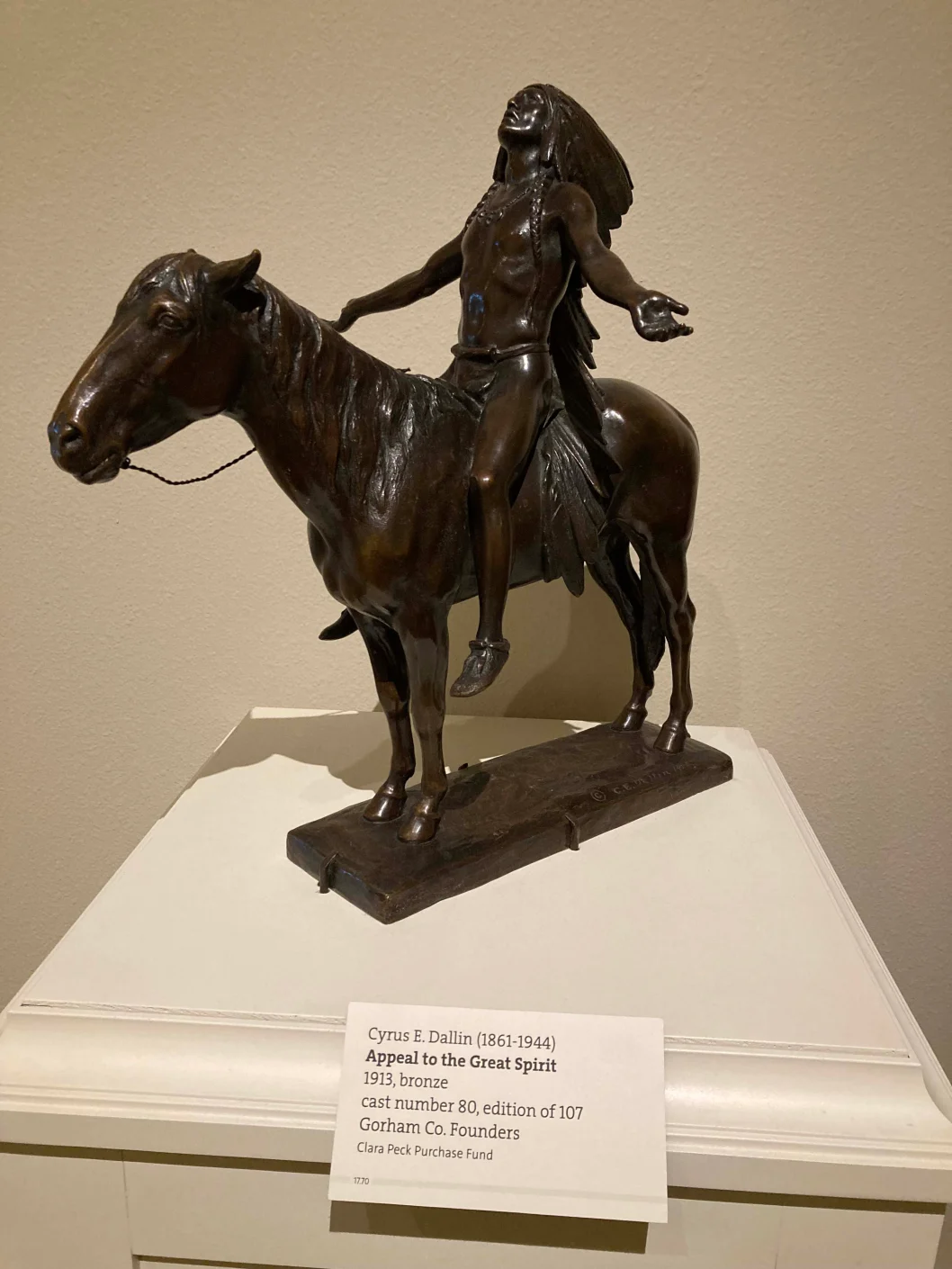
The ‘Great Spirit’ may also be called the ‘Great Mystery,’ says Russel Means, Lakota activist.
Above photo comes from blog, Camper Chronicles. It shows a small-scale replica in Whitney Western Art Museum (Cody, Wyoming, near Yellowstone National Park) of larger-than-life statue found outside Boston Museum of Fine Arts. The artist was Cyrus Dallin, born in Utah, who sculpted some 260 works of various figures. Dallin was a member of Unitarian church.
Men and women are spiritual creatures. Homo sapiens is religious by nature. Within us is a power that points to the sky, to a greater power.1
“Moving made me happy,” said Pretty Shield. Moving, travelling, is natural function of human beings. Our hearts, minds and legs enable moving from place to place.
Jesus of Nazareth was an itinerant preacher and healer in his native land many centuries ago. Some of his sayings bear on this aspect of his mission and on the basic need of men/women to move.
Foxes have holes, and birds have nests, but the Son of Man has no place to lie down and rest (Mt 8:20 GNB)
If one walks in the day he does not stumble . . . however if one walks in the night he stumbles (Jn 11:9f)
Is man searching for safety and ultimately, paradise?
Two Thoughts from Books
“.. the mystical needs of human beings are so urgent that they will seek their satisfaction wherever it may be found.”2
The Hobbit, Tolkien’s first published work of fantasy, bears a strong resemblance to the fairy tale, particularly in its structure, its interest in the idea of heroism, and its attention to the opposition between good and evil. Structurally, The Hobbit is neat and tidy, almost elegant. As its subtitle, “There and Back Again,” suggests, the underlying metaphor is the journey …3
Footnotes
“Men and women started to worship gods as soon as they became recognizably human; they created religions at the same time as they created works of art. This was not simply because they wanted to propitiate powerful forces, these early faiths expressed the wonder and mystery that seem always to have been an essential component of the human experience …” Karen Armstrong, A History of God (NY: Ballantine, 1994), p xix
Geoffrey Parrinder, Mysticism in the World’s Religions (NY: Oxford, 1976), p 195
Katharyn Crabbe, J.R.R. Tolkien (NY: Continuum, 1988), p 34








 Paul's Place for Writing