
Introductory Info
‘The Weight’ is a classic rock song, written by Robbie Robertson, and released by his musical group, The Band, in 1968, on their long-play album, Music From Big Pink (Capitol Records).

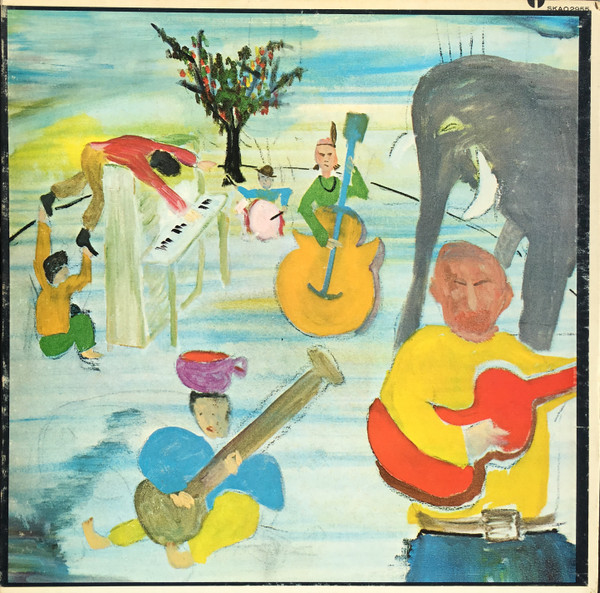
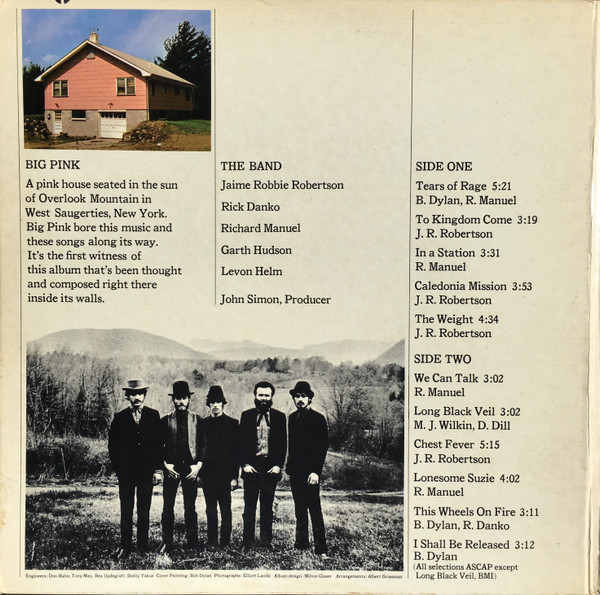
All members of The Band appear on the song and contributed to its making.
Robbie Robertson – guitar
Rick Danko – bass, vocal
Levon Helm – drums, vocal
Richard Manuel – organ, background vocal
Garth Hudson – piano
All now deceased (2026).
Lyrics
I pulled in to Nazareth, was feeling ’bout half past dead
I just need someplace where I can lay my head
“Hey, mister, can you tell me where a man might find a bed?”
He just grinned and shook my hand, “No” was all he said
Take a load off, Fanny
Take a load for free
Take a load off, Fanny
And (And, and)
You put the load right on me (You put the load right on me)
I picked up my bag, I went looking for a place to hide
When I saw Carmen and the Devil walking side-by-side
I said, “Hey, Carmen, come on, let’s go downtown”
She said, “I gotta go, but my friend can stick around”
Take a load off, Fanny
Take a load for free (For free)
Take a load off, Fanny
And (And, and)
You put the load right on me (You put the load right on me)
Go down, Miss Moses, there’s nothin’ you can say
It’s just ol’ Luke, and Luke’s waitin’ on the Judgment Day
“Well, Luke, my friend, what about young Anna Lee?”
He said, “Do me a favor, son, won’t you stay and keep Anna Lee company?”
Take a load off, Fanny
Take a load for free
Take a load off, Fanny
And (And, and)
You put the load right on me (You put the load right on me)
Crazy Chester followed me, and he caught me in the fog
He said, “I will fix your rack if you’ll take Jack, my dog”
I said, “Wait a minute, Chester; you know I’m a peaceful man”
He said, “That’s okay, boy, won’t you feed him when you can?” (Yeah)
Take a load off, Fanny
Take a load for free
Take a load off, Fanny
And (And, and)
You put the load right on me (You put the load right on me)
Catch a cannonball now to take me down the line
My bag is sinkin’ low and I do believe it’s time
To get back to Miss Fanny, you know she’s the only one
Who sent me here with her regards for everyone
Take a load off, Fanny
Take a load for free
Take a load off, Fanny
And (And, and)
You put the load right on me (You put the load right on me)
Commentary
The song consists of five stanzas and a chorus repeated five times. Each stanza or verse is made up of four lines; the chorus or refrain, five lines. This balance, an equality of measure, together with the rhyme pattern (last word of each line), integrate the song, creating harmony and beauty in hearing it, aside from any consideration of actual words and syntax (sentence/line structure).
The music of ‘The Weight,’ the audio of the vocals and the instruments, is layered with soft-sounding playing, beginning with the opening notes on folk guitar, the entrance of the slow and steady percussion, and the piano crescendos sounding at the end of each stanza and in the chorus after its lines. Remarkable is the coordination of bass guitar, piano and snare drum at conclusion of the chorus in seven notes, which serves to emphasize the last seven words,
“You put the load right on me.”
The upmost layer of the music is the singing, by Helm in first three and fifth verse, by Danko in the fourth verse and the combination of these with Manuel in each refrain. Helm and Danko are together in fifth and final stanza. The tone and timbre of Helm’s voice is clear and forceful, without any particular emotion other than what is natural to the characters he presents, first, the traveler who has arrived at Nazareth, second, the “mister” who says “no” bed is available, third, Carmen, who is allowed to escape the Devil. Helm’s cadence is fairly even, his inflection subtle, enough to show when he’s reporting another’s words, but modulates considerably in third verse, swelling with respect to “Luke’s waitin’ on the Judgment Day” and mellowing with “ol’ Luke’s” response, “Do me a favor, son, won’t you stay and keep Anna Lee company?” Helms vocal intensifies in final stanza –
“To get back to Miss Fanny, you know she’s the only one
Who sent me here with her regards for everyone” –
as does Danko’s in accompaniment. The journey is ending in return to Miss Fanny, but what will happen to the weight (i.e., the load carried by the singer/narrator by virtue of favors with which he’s tasked)?
Rick Danko’s vocals in fourth verse are different from what we’ve heard in Levon Helm’s. Danko’s tone is emotional, containing a sad plea (timbre), as if he’s thinking, upon meeting “crazy Chester,” ‘just how much am I supposed to carry of other people’s troubles?’ Remember, though we’re hearing two distinct voices, it’s the same anonymous pilgrim who’s telling his story.
The tempo of ‘The Weight’ is slow, almost grave or solemn. Its time signature is 4/4, four beats per measure, also called ‘common time.’ Influences upon ‘The Weight,’ according to Robertson, are the films of Luis Bunuel, which portray main characters trying to do good, yet suffering; he says, “the theme in his films are these people doing good things and really being tormented for trying to do a good thing.” Also, the culture and music of the Mississippi Delta, which Robertson experienced as a teenager, going there to join the band of Ronnie Hawkins, he credits as inspiration for ‘The Weight.’
Meaning of the Song
Robbie Robertson has spoken of the origins of ‘The Weight.’1 He says, “One night in Woodstock, upstairs in my house in a workspace next to my bedroom, I picked up my 1951 Martin D-28 acoustic guitar to write a song. I turned the guitar around and looked in the sound hole. There, I saw a label that said “Nazareth, Pennsylvania,” the town where Martin was based.” So the “Nazareth” mentioned in the song’s first line is a small town located in Northampton County, part of Lehigh Valley in eastern Pennsylvania.2 C.F. Martin & Co., maker of guitars and other stringed instruments, founded in New York City, 1833, moved to Nazareth around 1880. Here is a photo of inside label of a Martin D-28:
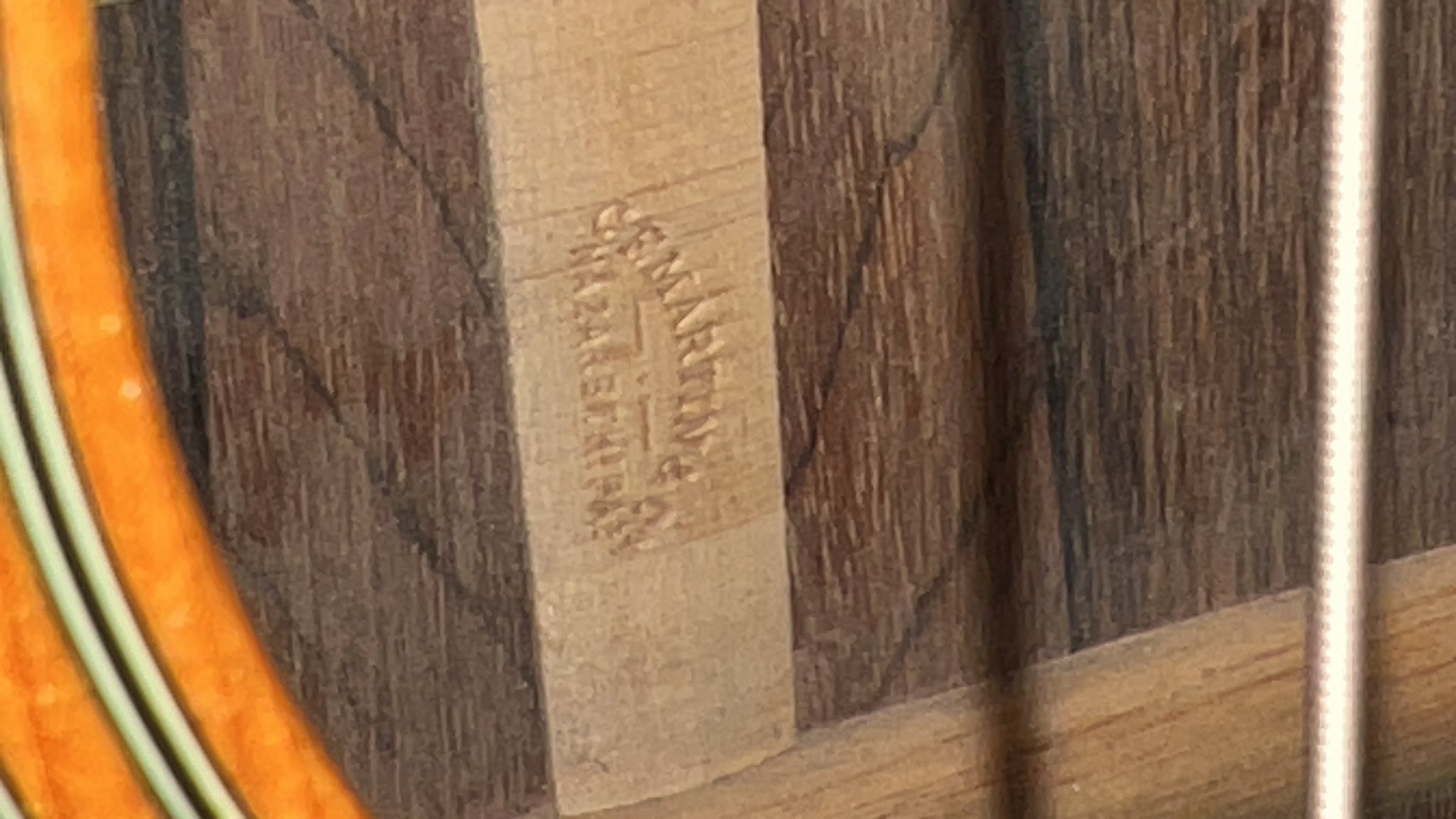
Robertson read the label and thus began his thought process on writing the words for his new song.
Upon hearing or reading entirety of the lyrics, it’s apparent they narrate a man’s experiences meeting people in Nazareth; most are known to him, Carmen, Luke and Chester. The “mister” of the first stanza is unknown to him. It’s unclear who “Miss Moses” is, but the visitor to Nazareth knows her name. She has some relation to old Luke. “Anna Lee” also is known to the man and Luke has charge of Anna Lee. The “Fanny” of the chorus is revealed in last stanza as the person who had sent this man to Nazareth on a mission to pass on her regards for its dwellers.
The main thing to be said of this mysterious man visiting Nazareth is that he carries a burden, the ‘weight’ of the title. This “load” is the crux of the song since it’s highlighted in each refrain. Noted is how the load is emphasized musically by the repetition – “and+and+and” in crescendo before the line, “you put the load right on me” and followed by those seven notes mentioned above and a lightly sung intonation in falsetto (absent in fourth refrain). Such musical cues add feeling to the words.
The burden or weight is transferred freely from Fanny to her messenger. It is a simple thing, “regards” or well-wishes. A problem is that the load grows heavy and heavier with each meeting between the man and the people of Nazareth. The traveller arrives in Nazareth uneasy, for he is “past dead” and needs a bed, but none is available according to the first person he sees. Then he sees Carmen and “the Devil,” a mystical sighting, or maybe ‘Devil’ is a bad strain within Carmen or her personality. Carmen says she must go, but the devil can stay. The man apparently has to deal with the Devil, while Carmen goes free. The man had wanted to hide before he spotted Carmen. Now he can’t hide; he’s got trouble! Next, Fanny’s messenger tells Miss Moses to “go down,”3 she can’t say anything. Perhaps Miss Moses had wanted to say something to old Luke, who’s waiting for the end of things (“Judgment Day”). The man addresses Luke, asking about “young Anna Lee.” Luke replies with a request to the man, “son,” won’t you care for Anna Lee? More responsibility! The last person the man meets is “crazy Chester,” who offers a trade. The visitor doesn’t want this trade, but does not want to fight about it. Chester responds, “boy,” please feed my dog “when you can.” The final verse has the messenger catching a train (“cannonball”) for return to Miss Fanny. He’ll let her know he saw everyone and they all need favors.
Human Need
The ‘Weight’ is human need. We all have needs and each of us requires help in meeting needs. The mysterious visitor to Nazareth (who is a shadow of Jesus Christ and his mission) takes on needs of the Nazareth characters he meets. He has accomplished his mission and returns to Fanny (by analogy, God) with the heavy load he’s acquired.
‘The Weight’ is a song to be heard and enjoyed, according to one’s own taste. It has a message, though it is not easy to discern and is open to interpretation. Robbie Robertson had said, after a performance of ‘The Weight’ with Staple Singers, “That was beautiful. It was like doing God’s work. And maybe that’s what motivated the song in the first place.” A scripture bearing on understanding of ‘The Weight’ –
Carry each other’s burdens, and in this way you will fulfill the law of Christ. (Gal 6:2 NIV)
To Listen
Original Version: https://youtu.be/FFqb1I-hiHE?si=Jp4AkUhr-BA5z-HN
With Staple Singers: https://youtu.be/ccJTFXvkXkA?si=ogEsKEOxeaR0YnJO
Notes
- Quotes of Robertson in this section (‘Meaning of the Song’) come from edited interview reported by Marc Myers in The Wall Street Journal (November 29, 2016), “‘The Weight’ by the Band’s Robbie Robertson”
- Nazareth was founded by Moravian missionaries in 1740 on land owned by famous Anglican evangelist, George Whitefield.
- God Almighty said to Moses upon Mount Sinai, “Go, get thee down; for thy people, which thou broughtest out of the land of Egypt, have corrupted themselves” (Ex 32:7 KJV). Also, there is a hymn, ‘Go Down, Moses,’ an important spiritual song of Afro-American history and culture. William Faulkner wrote Go Down, Moses, a collection of seven stories of the antebellum South, specifically taking place in a fictional county in Mississippi.


You know, I thought of a spiritual connection in this song. He uses quite a few biblical terms, places, names, particularly Nazareth, the devil,Moses, etc. I thought of Fanny Crosby, who wrote, “Tell Me the Story of Jesus.” Interesting! 😊👍🏽
Hi Ellie. Thanks for reading and commenting. Definitely, ‘The Weight’ contains a number of Bible allusions that naturally direct readers/auditors to possible religious meanings. Thank-you for mention of Fanny Crosby, author of many hymns, including ‘Blessed Assurance.’ I had not thought of that connection.
Pauly I hadn’ t listen to that song for a long time. But the lyrics had a lot of spiritual revelation and continuity. The weight—being weighed down by making the right choices—between what is right and what is hard. Carmen gave him the option of walking with the devil…But seemingly he was trying to find Jesus in the midst of all this. Thanks for a very well-written and informative post. Have a blessed new week.
Hi Claudia! Thanks for reading and for your comments. I’m glad you find some spiritual meaning in the song. May your faith grow ever stronger. I enjoy your blog.
You are welcome…I always appreciate your writings and your research. Have a blessed week!